OANDA review: safe and open to everyone, but is it still priced for 2026?
OANDA asks for no minimum deposit and answers to the CFTC, NFA and FCA. We read its US fee pages and set them against raw-spread rivals to see who still gains from that safety.
7.6/10
OANDA is a strong pick for US and UK traders who put regulation and a clean, open account process first. You can start with any amount, deposits and withdrawals carry no fee from OANDA, and the regulators are the real thing. The price of that comfort is spread-only pricing that costs more than raw-spread brokers for active traders.
Best for
US and UK forex traders who put regulation and low entry barriers first
No minimum deposit or minimum balance to open or keep an account
Regulated by the CFTC and NFA in the US and by the FCA in the UK
No OANDA fee on deposits or withdrawals, wires included
TradingView, MT4 and web and mobile apps on the US site
What does not
EUR/USD at 1.4 pips on spread-only is dearer than raw-spread rivals
The $20 monthly inactivity fee starts after 12 months without trading
A 1% conversion mark-up applies on v20 accounts trading other currencies
US rules limit leverage, and product range depends on your country
Specs
Maker
OANDA Global Corporation
Minimum deposit
None
EUR/USD spread (US, typical)
1.4 pips
Elite Trader rebate
US$5 to US$17 per million traded
Inactivity fee (US)
$20 a month after 12 months idle
Deposit and withdrawal fee
None from OANDA
Currency pairs (US)
68 or more
Platforms (US)
TradingView, MT4, web, mobile
UK regulator
FCA (OANDA Europe Ltd)
Ask a forex forum which broker is safest and OANDA comes up within three replies. Founded in 1996, it is one of the few names that keeps its regulators and its plain-language fee pages in the same place. We wanted to know whether safety alone still justifies the price in 2026.
The safety case is real, with a footnote
Regulation depends on where you live, and OANDA is several companies. US clients deal with an entity overseen by the CFTC and the NFA. UK clients deal with OANDA Europe Ltd, which one third-party review lists under FCA reference 542574, with FSCS cover up to £85,000 and retail leverage capped at 30:1.
The footnote is that the same brand name covers weaker regimes elsewhere. The FCA and CFTC protections belong to the entity you sign with, so check which one your account is opened under before you fund it.
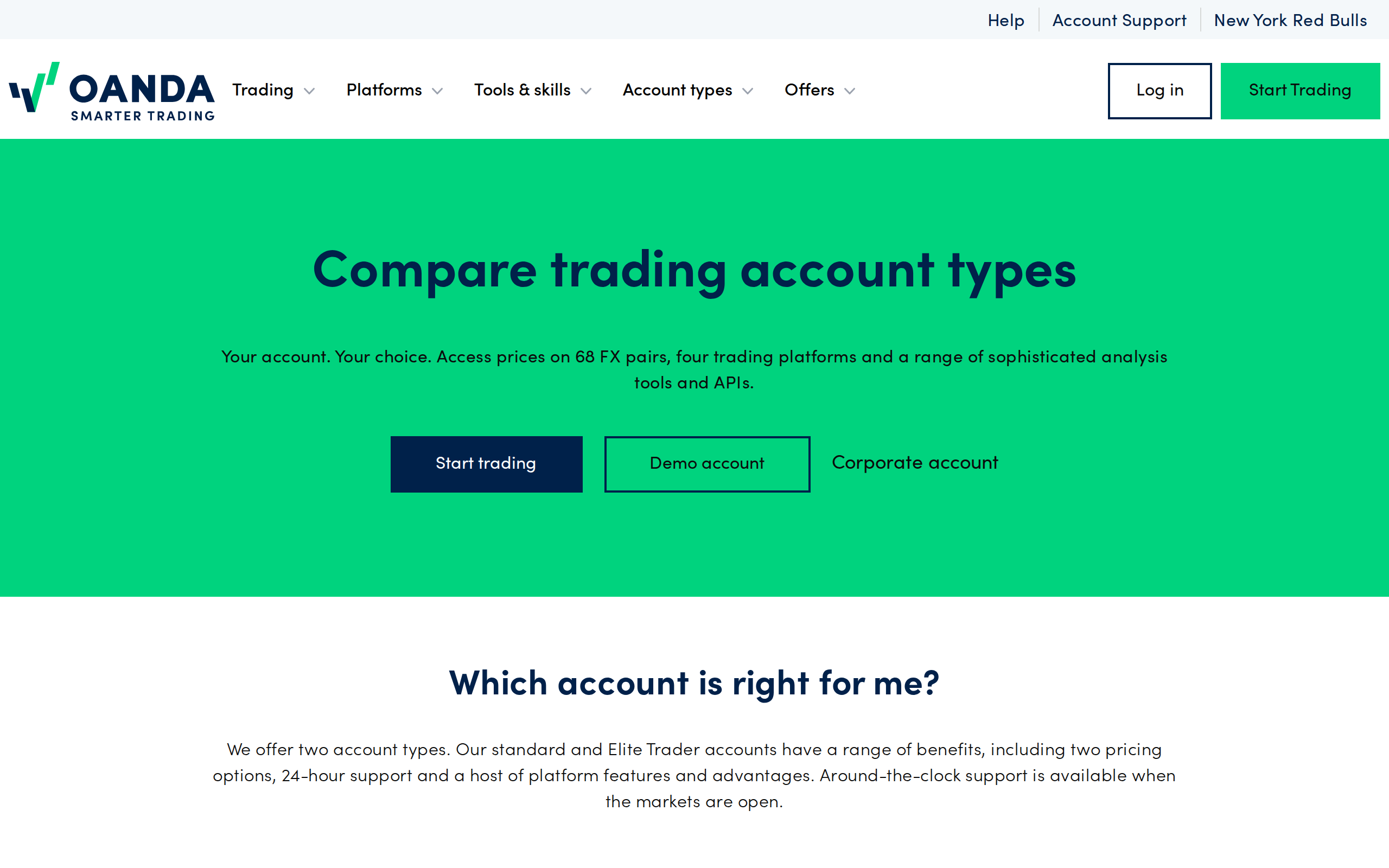
OANDA's account comparison page, which asks which account suits you before it shows any table.
What trading costs
Here is where the review turns critical. The US pricing page quotes 1.4 pips on EUR/USD, 2.0 pips on GBP/USD and 1.4 pips on USD/JPY for the spread-only model, where the commission is wrapped into the spread. Spreads widen around news and at the open and close of trading days.
A raw-spread broker such as Pepperstone or Fusion Markets typically shows a fraction of a pip plus a fixed commission, and the all-in figure usually lands below 1.0 pip on EUR/USD. On one standard lot, the gap is a few dollars each way. That is nothing on a monthly trade, and it is a serious drag if you place forty.
oanda.com
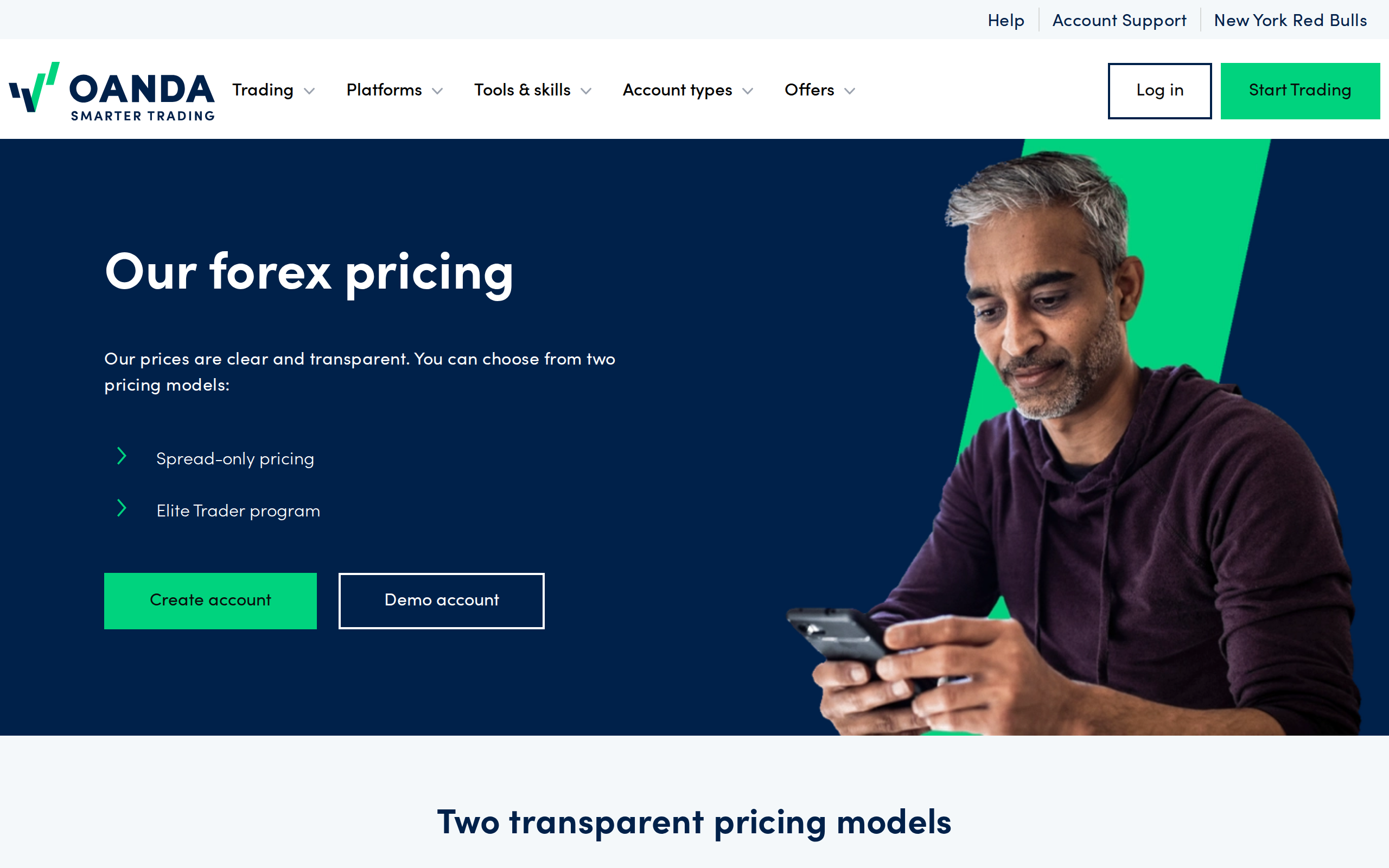
The US pricing page describes two pricing models. Spread-only is the default.
Margin is the other side of the ledger. OANDA's page says margin starts at 2% on EUR/USD and 3% on AUD/USD for US clients, which is the 50:1 and 33:1 ceiling that US rules allow. UK clients see 30:1 on majors. Anyone chasing 500:1 leverage will find none of it here, and that is a design choice, not an omission.
OANDA's answer to the cost gap is the Elite Trader programme: cash rebates of US$5 to US$17 per million traded, aimed at high-volume accounts. If you trade a few standard lots a week, you will not reach it.
Fees that hide outside the spread
Deposits and withdrawals carry no OANDA charge, though your own bank may bill you. Two other lines are worth knowing:
A $20 monthly inactivity fee after 12 months without trading, applied to the smallest sub-account first. It does not apply while a position is open.
A 1.0% mark-up on the mid-market rate when you trade an instrument in a currency that differs from your account currency, on v20 forex accounts.
Some review sites quote $10 for the inactivity fee. We used the figure on OANDA's own US page. Overnight financing is a blend of liquidity providers' tom-next swap rates.
oanda.com
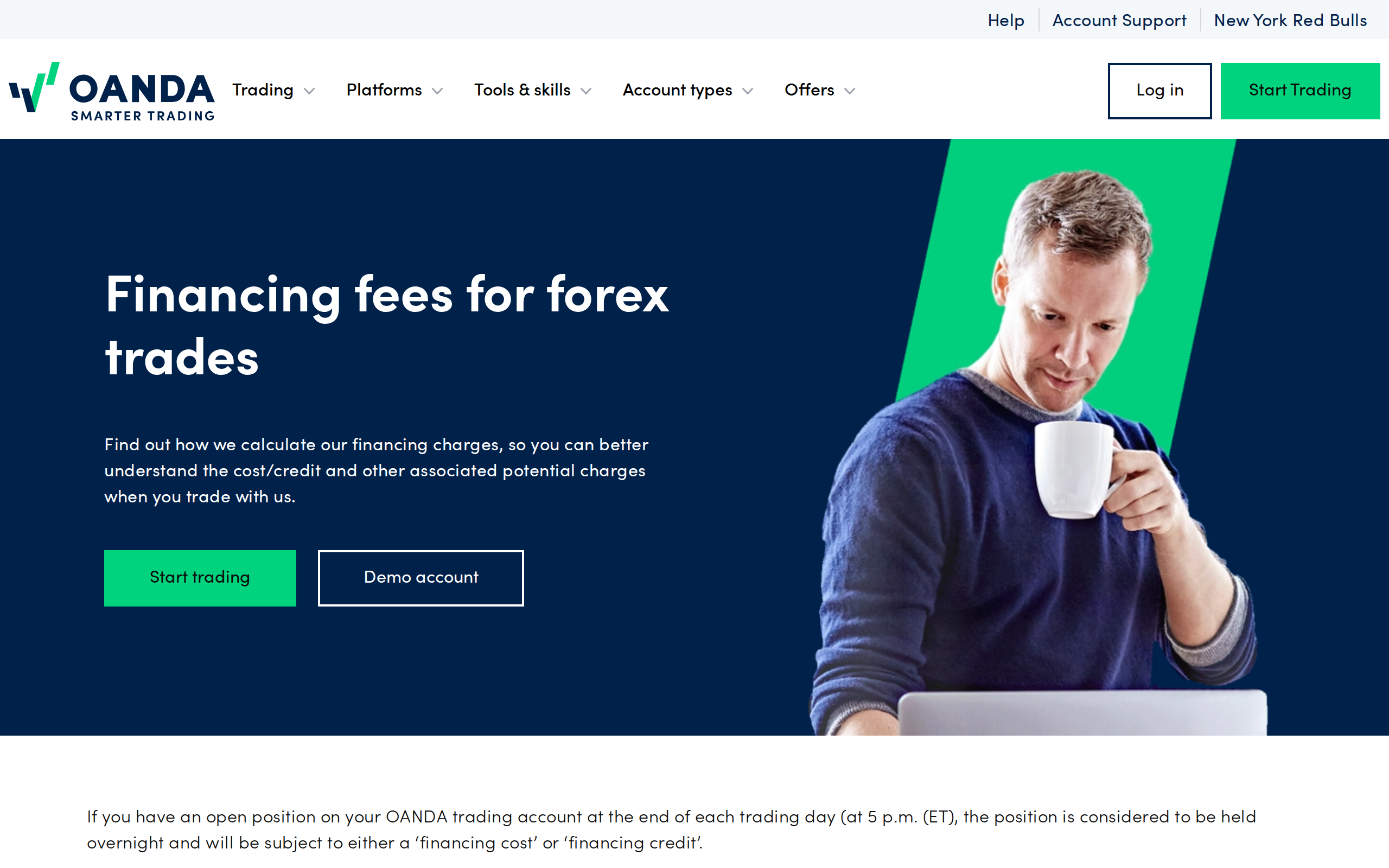
Financing fees are explained on their own page. Rates for each pair are published separately.
Platforms: fewer than the raw-spread crowd
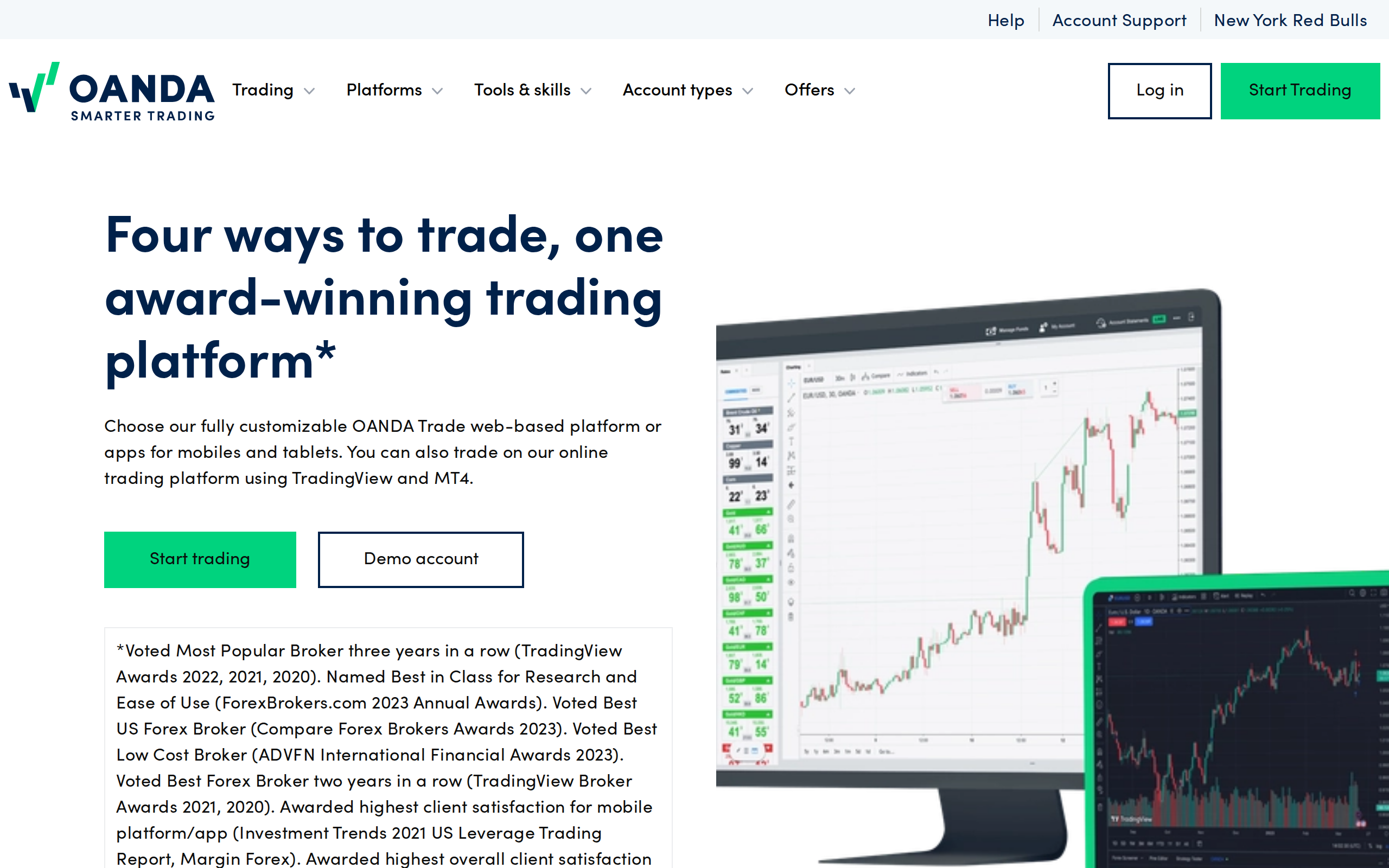
The US platform page says you choose between TradingView, MT4, or OANDA's own web platform and mobile app. The global site names MT5 in its place. There is no cTrader.
oanda.com
The platforms page. The US list is TradingView, MT4, web and mobile.
The proprietary web platform is easy for a first account. Anyone with an MT4 robot library will be glad to see MT4 offered at all, since US brokers that carry it are rarer than you might think.
Who should pick OANDA, and who should skip it
Pick OANDA if you are a US or UK resident starting small, if you want a regulated broker with an open fee schedule, or if you value TradingView charting on a live account.
Skip it if you scalp, if you place dozens of trades a month, or if all-in cost is your only criterion. Skip it if you want cTrader or a wide stock list, and if you plan to leave an account idle for over a year.
Trading leveraged products carries a real risk of loss and can exceed your deposit in some regimes. This review is not personal advice.
Verdict
Safe, open and honest about its charges, but not cheap. We give OANDA 7.6 out of 10: excellent for what it protects, average for what it charges.
7.2
FOREX.com review: the best fit for a US trader who wants MT5 and TradingView?