Pepperstone Razor account review: still the cheapest way to trade EUR/USD and gold?
Razor pricing pairs raw spreads with $3.50 per lot per side. We priced a round trip on EUR/USD and gold, checked the regulators, and looked at where the low-cost pitch runs out.
8.6/10
Pepperstone is one of the two or three cheapest places to trade FX and gold with a raw-spread account, and it pairs that with five platforms and a long list of regulators. The catch is that the low cost belongs to active traders on the Razor account. Buy-and-hold users and anyone who wants share dealing or investor education should look elsewhere.
Best for
Active EUR/USD and gold traders who value low all-in cost
FCA, ASIC, CySEC, BaFin, DFSA, CMA, SCB and others, by entity
Deposit and withdrawal fees
None charged by Pepperstone
The question we set ourselves was narrow: for someone who trades EUR/USD and gold several times a week, does the Razor account still give the lowest all-in cost? The short answer is yes, with conditions. The long answer is mostly arithmetic.
What a round trip actually costs
Razor strips the markup out of the spread and bills commission separately. Pepperstone's fee page lists $3.50 per standard lot, per side, on FX and spot gold when you trade on its own platform or MetaTrader. cTrader and TradingView are priced by unit, at $6 and $7 round trip per lot respectively.
pepperstone.com
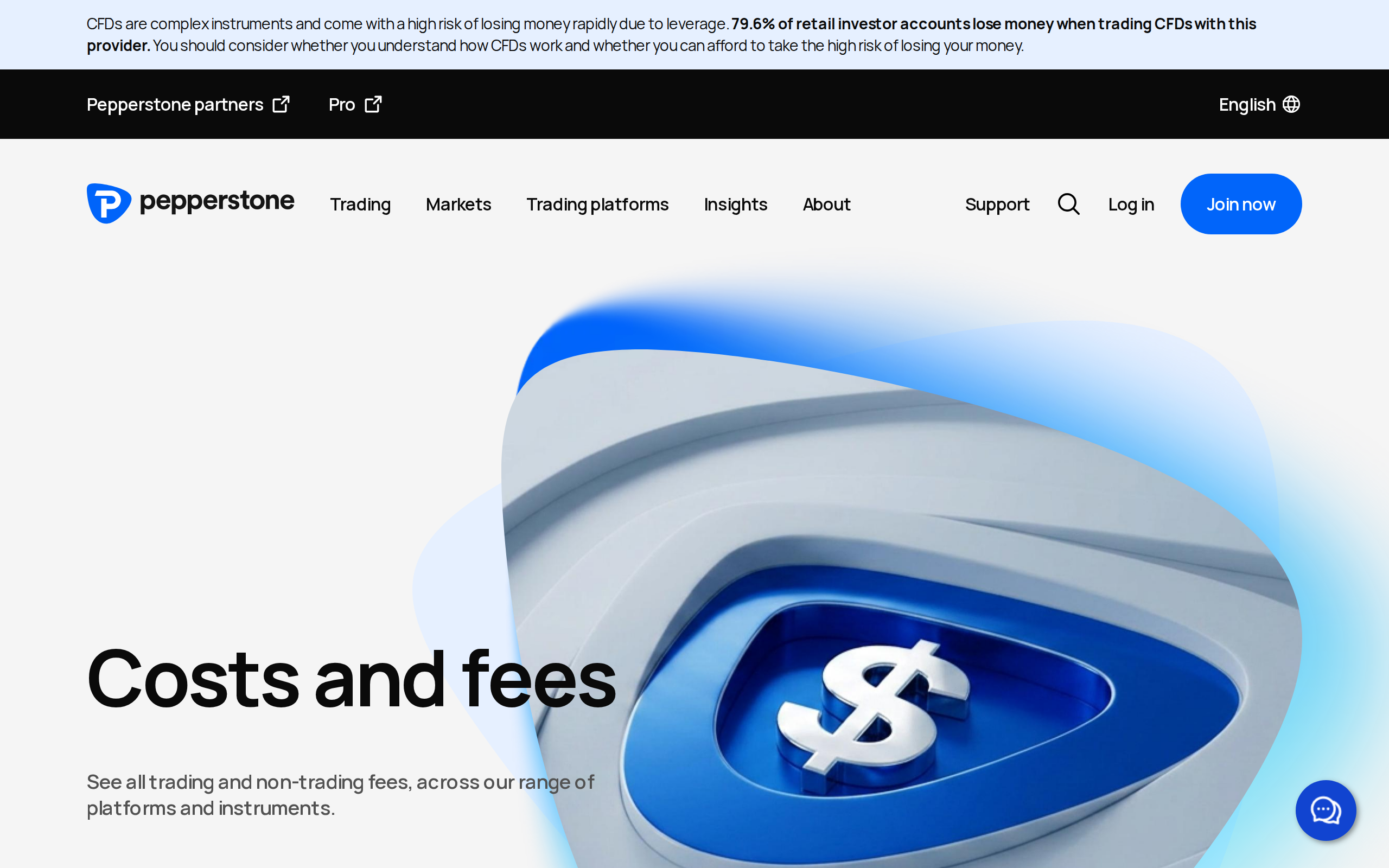
Pepperstone's costs and fees page, as it loaded for us. The tables with the per-instrument figures sit further down.
Put numbers on it. One published independent test measured the Razor EUR/USD spread at 0.19 pips, against 0.27 pips for the industry average in the same test. On a standard lot that is about $1.90 of spread plus $7.00 of commission, or roughly $8.90 for the round trip. The Standard account shows a 1.0 pip minimum on majors, which is $10 a lot before you count anything else. The gap is small on one trade and large across a month of forty.
Gold is where Razor is less dramatic. The fee page gives a 0.08 point minimum on spot gold, and Pepperstone says it cut gold spreads by around 30% in 2026. We treat that as a claim from the maker plus one reviewer, not something a single afternoon confirms, because gold widens sharply around US data.
Two details matter more than the headline. First, the account currency changes the commission: $3.50 for USD and AUD, a slightly different figure in sterling or euros. Second, trades under a full lot are charged proportionally, so micro-lot testers pay the same rate.
Five platforms, one login
Most brokers give you MetaTrader and stop. Pepperstone runs MT4, MT5, cTrader, TradingView and a proprietary platform.
pepperstone.com
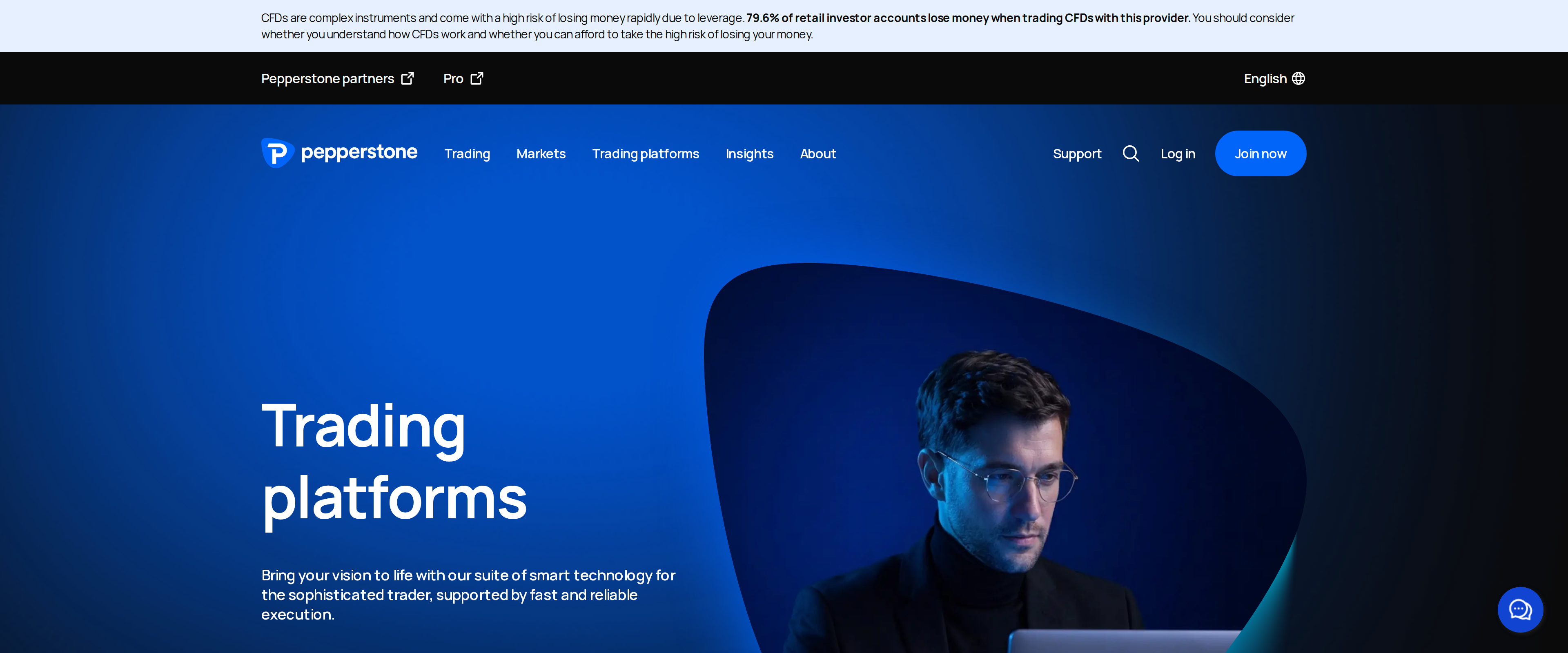
The platforms page lists MetaTrader 4 and 5, cTrader, TradingView and Pepperstone's own platform.
cTrader is the one we would point a scalper towards. It has depth of market, level-two style pricing and cleaner order tickets than MT4, and it is the platform where Razor commission is easiest to see per trade.
pepperstone.com
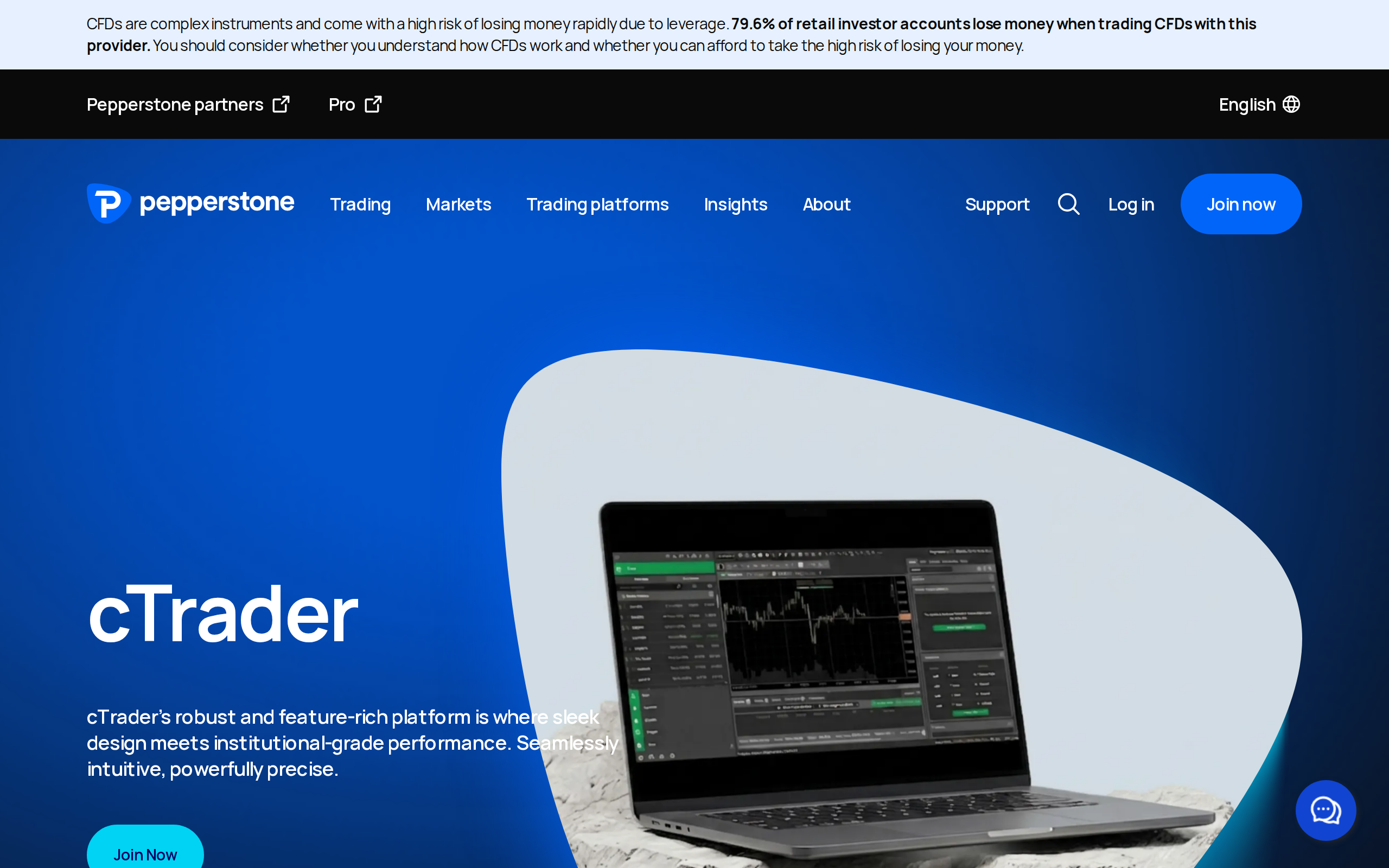
The cTrader page on Pepperstone's site: the platform is offered next to MetaTrader on the same account.
TradingView integration suits chart-first traders who want to place orders from the chart they already use. That plan carries the $7 round-trip rate quoted above, so it is not the cheapest route in.
The costs outside the spread
A low spread is only one line of the bill. Positions held past the daily rollover pay or earn a swap, and Pepperstone charges triple on the weekend financing day. Swap rates change daily and are published on the platform, so a swing trader who holds gold for a fortnight can see financing outweigh commission. Razor helps scalpers and day traders most, because they close before rollover.
There is also slippage. A 0.0 pip quote means nothing if your market order fills a pip away during a payrolls spike. Raw-spread accounts all share this, and the fee page says outright that its cost examples ignore slippage and weekend gaps. Test on a small live account through a news release before you scale a strategy.
The tone of the fee page deserves credit. Stated deposit and withdrawal fees are zero, account opening and closing are free, and the commission is fixed rather than tiered by volume. That leaves fewer surprises than a broker whose cost depends on a loyalty ladder.
Safety, and the entity trap
Pepperstone lists licences from the FCA, ASIC, CySEC, BaFin, the DFSA and Kenya's CMA, plus the Securities Commission of The Bahamas. Client money sits in segregated bank accounts, and retail clients get negative balance protection and a 50% stop-out.
Here is the trap. The page we loaded from a Vietnamese IP address showed the Bahamian entity, with 1:200 retail leverage and a $10 minimum deposit. A UK or EU client is served by a different company with different leverage caps and different compensation rights. The protection you get depends on the entity, not on the brand, so read the legal name at sign-up. Negative balance protection also does not apply to professional clients.
The site's own risk warning says 79.6% of retail accounts lose money trading CFDs with the provider. Take that number seriously.
Who should skip it
If you place four trades a year, the commission structure buys you nothing and Standard is simpler. If you want shares, a research desk or guided courses, IG covers that ground better. If you want guaranteed fixed spreads in a fast market, no raw-spread account offers that.
For the active trader who watches cost per lot, Pepperstone is where we would start comparing. Trade CFDs only with money you can afford to lose, and treat this write-up as information, not advice for your situation.