Crypto.com review: the app, the card and the exchange once spreads and lock-ups are counted
Crypto.com sells an easy app, a Visa card tied to CRO staking and a cheaper exchange. We read the fee tables, card tiers and staking terms to see what the convenience costs and where the money gets locked.
6.6/10
Crypto.com is worth using for the Exchange and, for a narrow group, the card. It is a poor place to make casual purchases in the app, where the built-in spread can reach 2% against the order book. The Exchange starts at 0.25% maker and 0.50% taker and falls with volume. The rewarding card tiers require staked CRO, from $500 up to $500,000, which concentrates your money in one volatile token. Customer support complaints are frequent, and a 2022 breach cost 483 accounts about $34 million.
Best for
Active crypto traders who use the Exchange and already hold CRO for card rewards
Crypto.com is not one thing. There is a friendly app for buying coins, a Visa card that pays rewards in CRO, and a separate Exchange for people who want an order book. They share a login and a token, and they price very differently. Judging the company as a single deal is how people end up paying the highest price for the most casual product.
So we took them one at a time, and asked which combination is worth having. The short version: the Exchange is the product to build around, the card is optional, and the app is a convenience you should pay for sparingly. Regional rules differ, and some features listed here may not be open to you.
The app: convenient, and priced like it
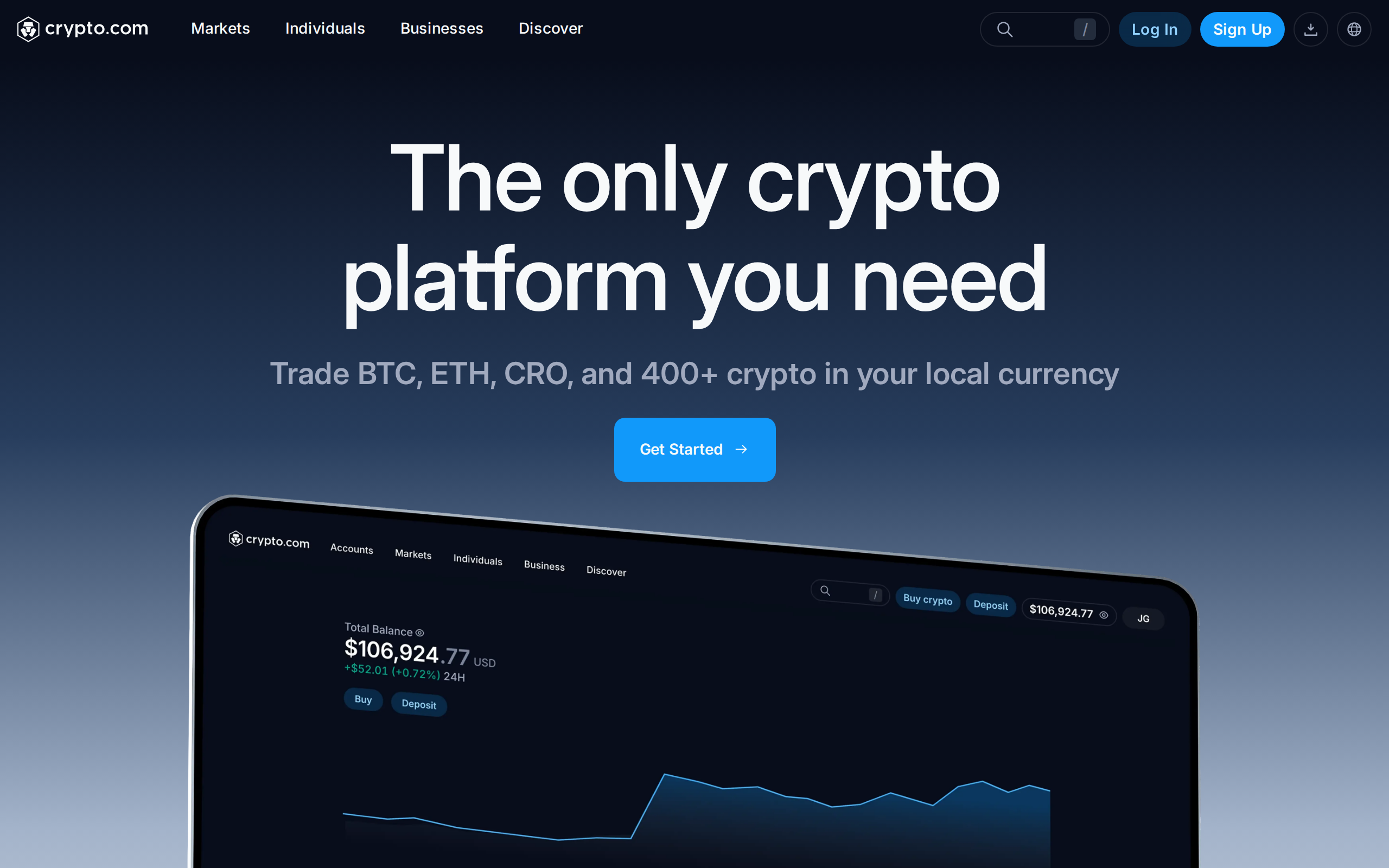
The homepage promises "the only crypto platform you need", with more than 400 coins in local currency. The catch sits in how an instant buy is priced. The review we relied on for this puts the built-in spread at up to 2% against the Exchange price, and sizes the indirect cost at 0.5% to 2%.
On a $1,000 purchase, 2% is $20 gone before the coin moves an inch. Do that monthly and it dwarfs any staking reward you might earn on the balance. The app is fine for a first purchase and a poor habit.
The Exchange: where the fee table is friendlier
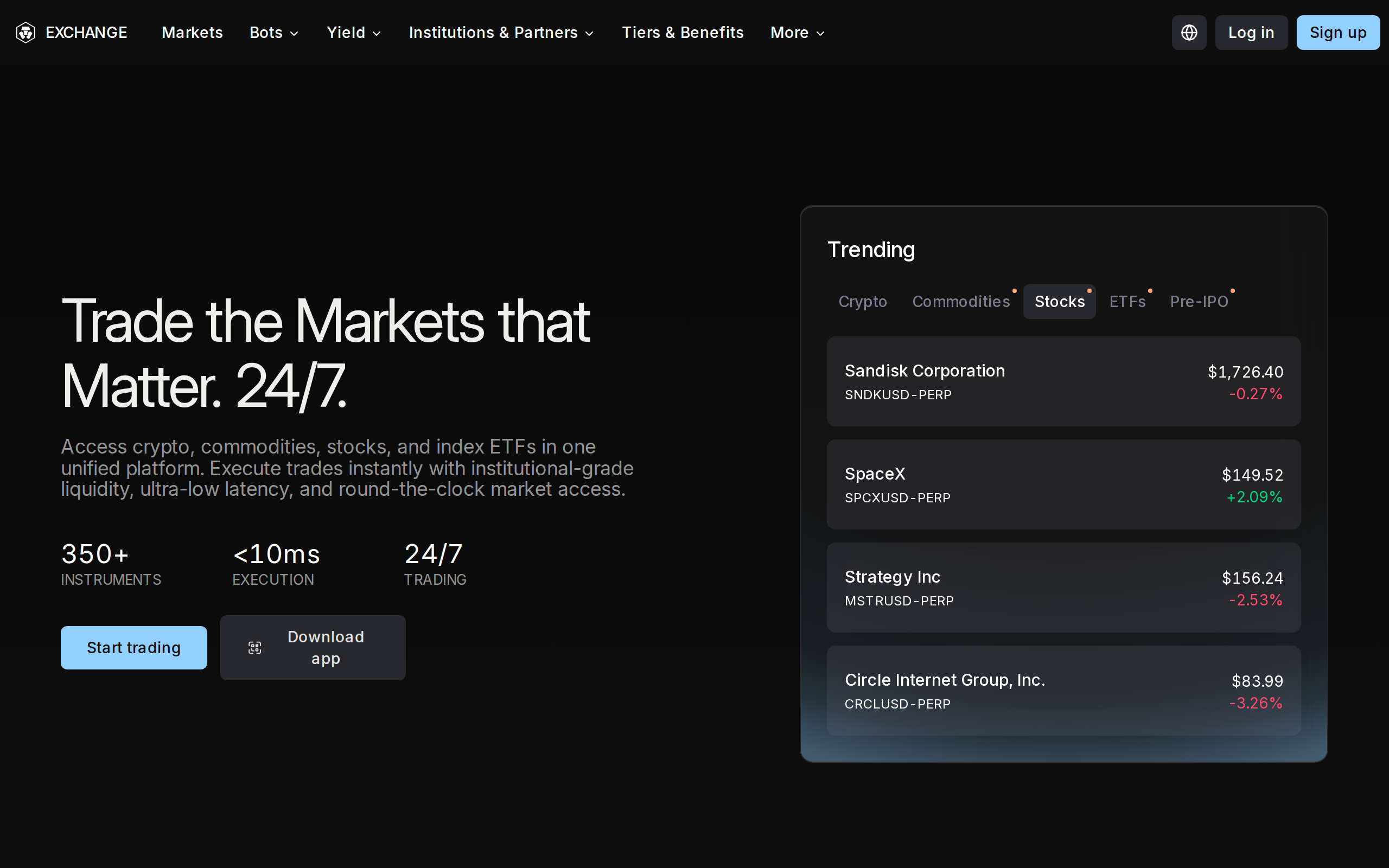
The Exchange page describes crypto, commodities, stocks and index ETFs in one unified platform. The fee schedule is a normal maker and taker ladder:
Under $10,000 of 30-day volume: 0.25% maker, 0.50% taker.
With CRO held, the entry tier becomes 0.00% maker and 0.44% taker.
The top retail tiers reach roughly 0.05% taker, and VIP 1 (from $2.5 million) is 0.065% maker and 0.10% taker.
crypto.com
The Exchange landing page: order-book trading rather than the app's instant-buy button.
For anyone trading more than a few times a month, moving from the app to the Exchange is the single biggest saving on offer. Use limit orders where you can, since the maker rate is where the discount is largest. Withdrawal costs remain: about 0.0006 BTC and 0.004 ETH, with free ACH for dollars.
The card and the CRO tax on ambition
The card page lays out five tiers. Midnight Blue is free and needs no stake, but its cashback is 0%. Ruby Steel asks for a $500 stake for 1.5% back, up to $750 a month. Royal Indigo asks for $5,000 for 2.5%. Icy White needs $50,000 for 3.5%, and Obsidian $500,000 for 4.5%, with monthly fees on the middle tiers. Rewards arrive as CRO.
crypto.com
The Visa card page. The video hides the tier table, which sits further down the page.
Work through Royal Indigo. You lock $5,000 in a single token to earn 2.5% on spending that also pays you in that token. If CRO falls 20%, that swing costs more than a year of cashback on modest spending. The card makes sense only if you would hold CRO anyway.
Staking, and what "flexible" leaves out
The staking page lists 24 assets. Sample rates: ETH 2.56%, SOL 4.91%, CRO 11.44%, ATOM 17.87%, all estimates that change. The page says you can unstake at any time, then adds two conditions: chains may impose their own bonding periods, and you earn nothing while you wait. Rewards are distributed up to three times a week.
crypto.com
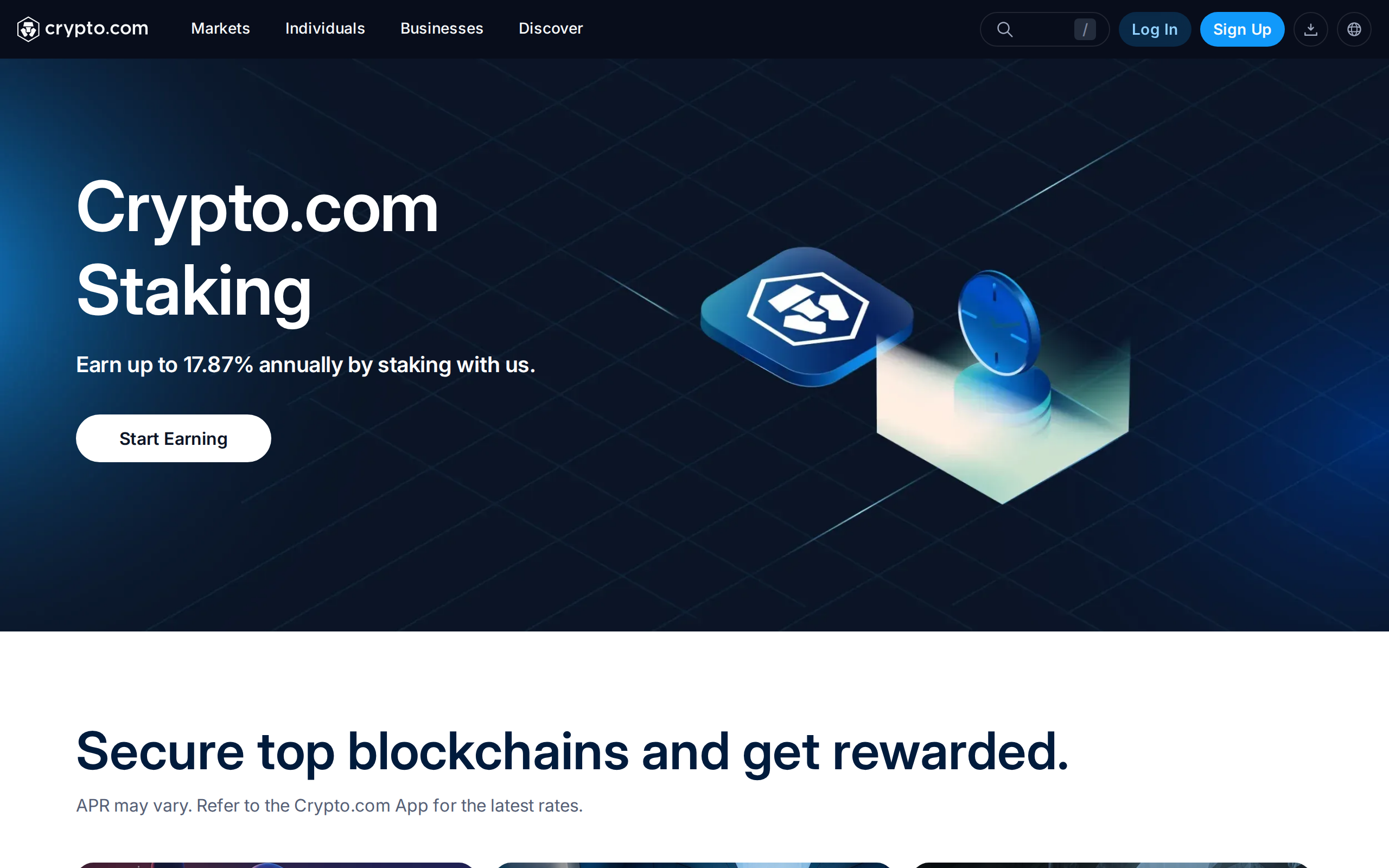
The staking page's headline rate of up to 17.87%. Majors such as ETH pay far less.
Read the headline number as the top of a range. The coins with the best yields are usually the ones with the most price risk.
The safety record and the support problem
In January 2022, attackers bypassed two-factor authentication and withdrew 4,836 ETH, about 443 BTC and small amounts of other assets from 483 accounts, roughly $34 million in total. The company reset tokens for all users and rebuilt its 2FA. Reviews we read report no comparable incident since, and the Exchange publishes Merkle-tree proof of reserves, though the most detailed attestation dates from 2022. Licences cover the US (including a New York BitLicense), the EU, the UK and Singapore.
Support is the weaker side. Trustpilot scores hover around 2.0 out of 5, with complaints about KYC holds and slow replies on complex cases.
Who should use it
Use the Exchange if you trade often and want a broad coin list. Use the free card if you want a Visa and no strings. Avoid the app's instant buy for anything sizeable, and avoid staking CRO merely to unlock a tier. Crypto assets are volatile, you can lose everything you put in, and this review is not personal advice.
7.0
Binance review: deepest liquidity in crypto, with a regulatory record you must weigh